Resource Guide
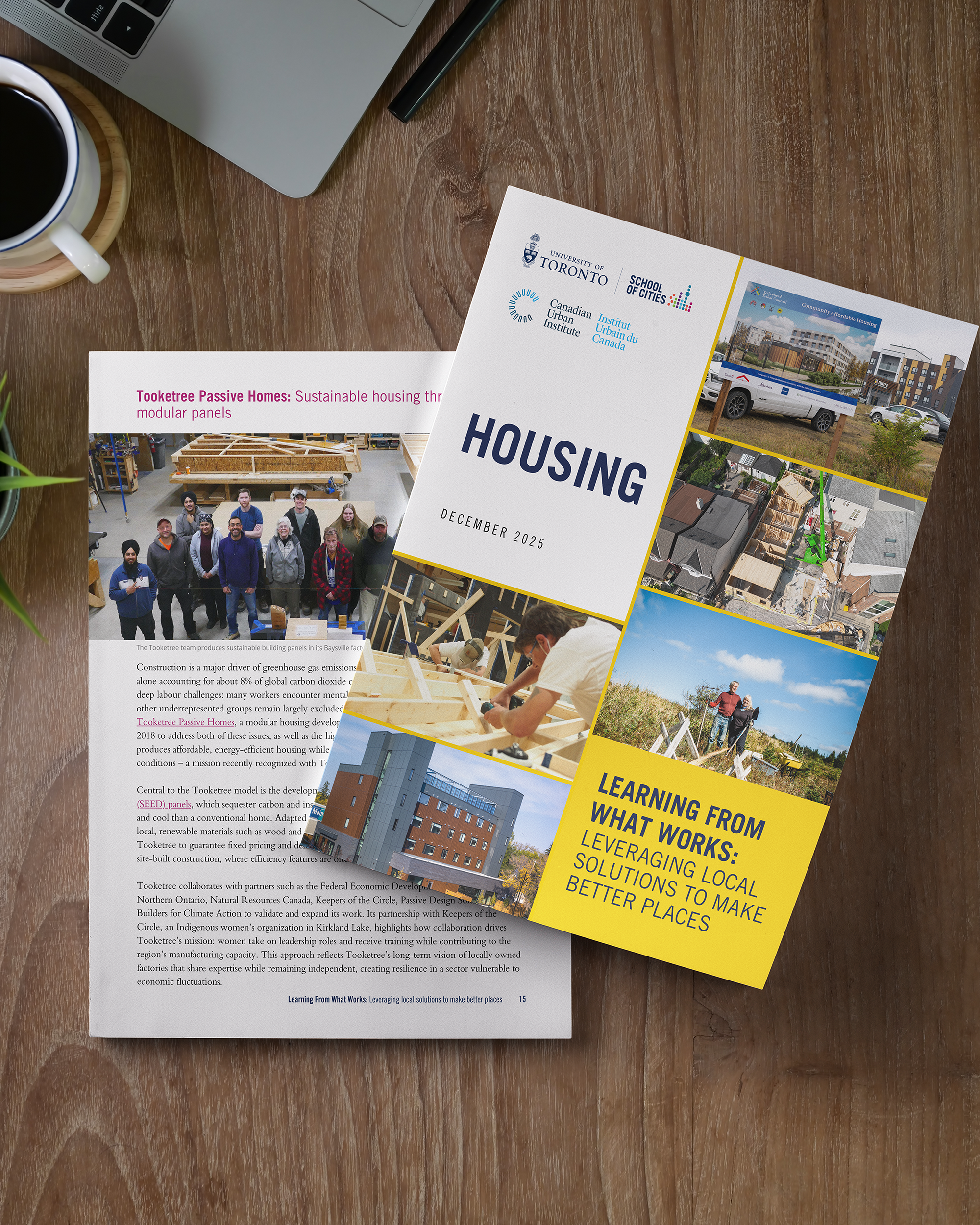
School of Cities Learning From What Works: Leveraging local solutions to make better places
Learning From What Works is an initiative led by the School of Cities and the Canadian Urban Institute to identify effective, locally driven solutions to the complex challenges communities face across Canada.
In May 2025, the initiative issued a national call for innovative approaches to place-based challenges. The response was inspiring, with more than 120 organizations from across the country sharing community-based solutions that are already demonstrating success.
The resulting report features 89 of the most promising submissions, including 16 finalists whose initiatives are explored in depth. These transformative local solutions come from a diverse range of organizations and address issues including housing, mental health, climate change, and more.
Tooketree was honoured to be selected as a finalist in last year’s 𝘓𝘦𝘢𝘳𝘯𝘪𝘯𝘨 𝘍𝘳𝘰𝘮 𝘞𝘩𝘢𝘵 𝘞𝘰𝘳𝘬𝘴 competition and to have our housing-focused work recognized alongside so many inspiring place-based projects from across Canada.
The report also includes a chapter exploring how social innovations like these can be scaled, enabling Canada to build on “what works” by leveraging local assets and trust to address pressing economic, social, environmental, and cultural challenges.
The report was launched at the Canadian Urban Institute’s State of Canada’s Cities Summit in Ottawa in December 2025.
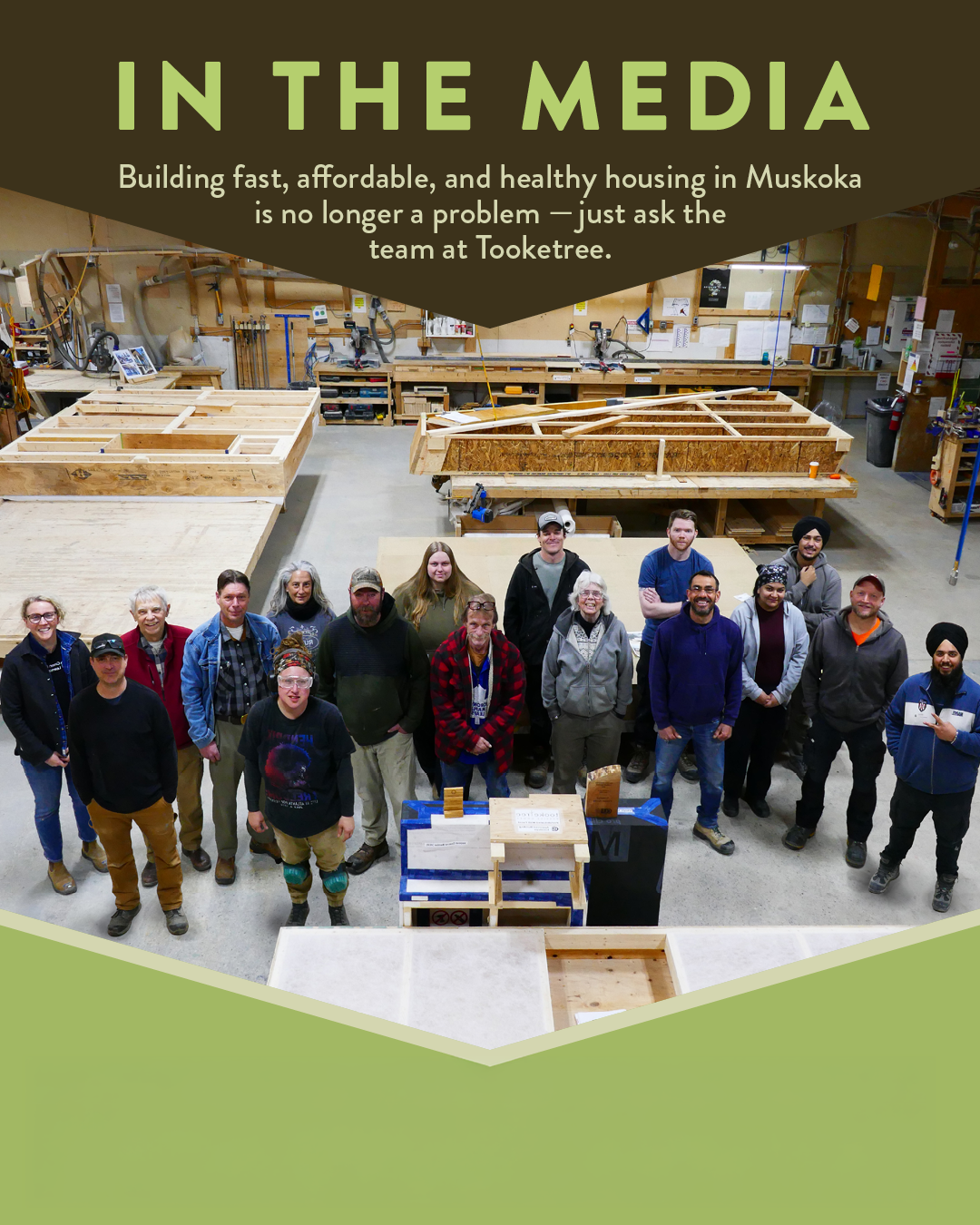
Building fast, affordable, and healthy housing in Muskoka is no longer a problem —just ask the team at Tooketree.
“This isn’t a new idea we’re floating—it’s a proven solution we’ve had ready and waiting for years,” said Melinda Zytaruk, co-founder of Tooketree. “We brought SEED panels to the table again and again for developers, municipalities, and non-profits looking to solve the housing crisis, because we believe the answer has been sitting right here in Muskoka the whole time.”
Discover all of the benefits of Tooketree’s SEED building systems and why we believe they’re the answer to Muskoka’s affordable multi-unit housing crisis in today’s press release!
Building Smarter: offsite construction, prefabrication and modular development. A Guide For Municipalities
This guide was developed for the Federation of Canadian Municipalities by Zenon Group. This guide was funded by the Canada Mortgage and Housing Corporation.
The following organizations contributed to the guide:
The Alliance of Canadian Building Officials Associations
CSA Group
ATCO
Boston
Consulting and the Modular Building Institut
Social Contracting Guide: Construction and Retrofits
This guide supports project owners and general contractors who want to create social value in construction and retrofit projects, while simultaneously addressing economic and
environmental goals.
By addressing real and perceived challenges, this guide demonstrates what is possible, outlining practical steps and pointing to resources that build understanding and confidence. It provides actionable and simple tools and templates that can be implemented within any organization’s procurement processes.
The guide seeks to increase consistency and alignment on social contracting language and approaches, so that it may become common industry practice.
The Atmospheric Fund, Prepared by Buy Social Canada
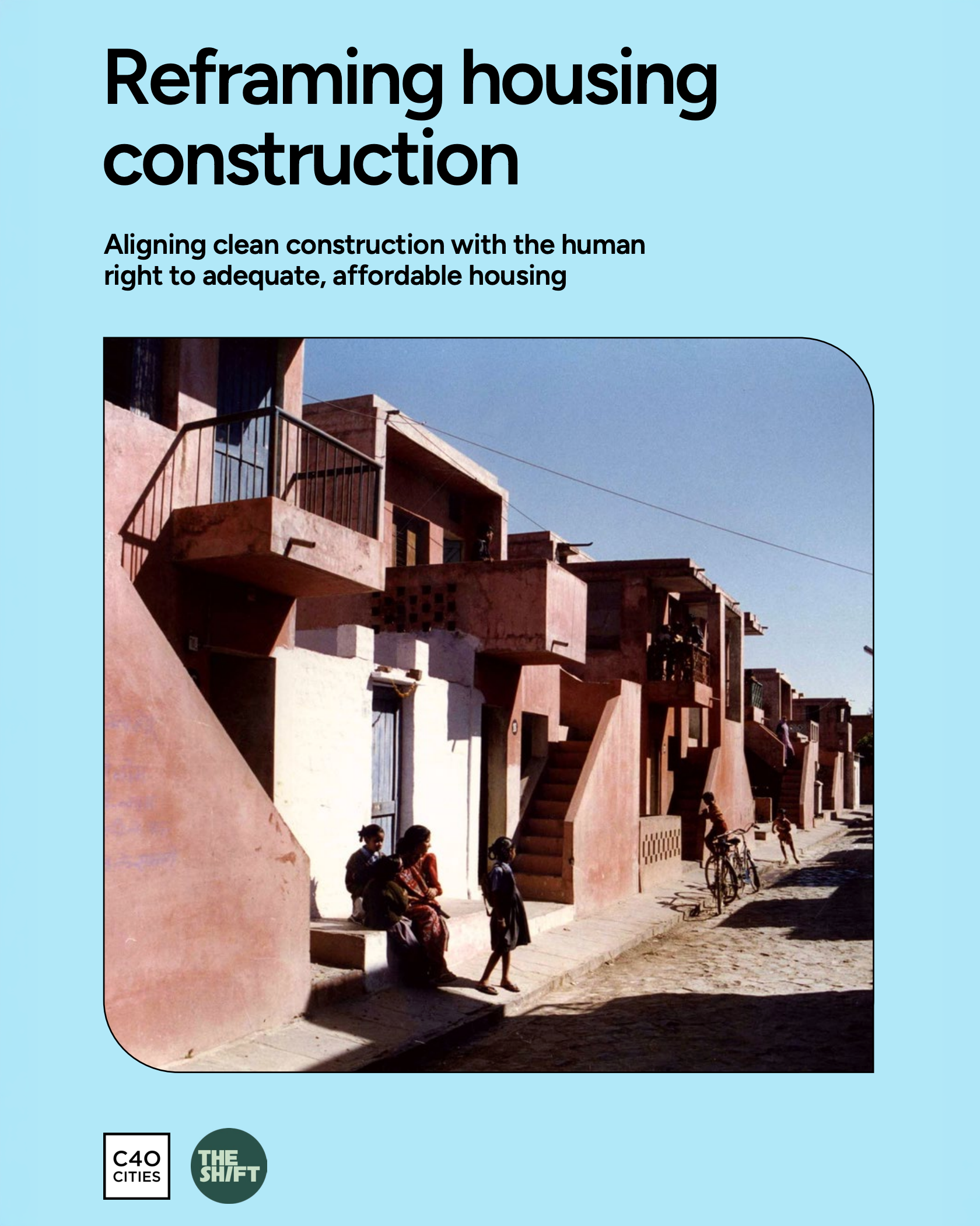
Reframing housing construction - Aligning clean construction with the human right to adequate, affordable housing.
This white paper was created to support local and subnational governments to act on the affordable housing and climate crises by reframing their approach to policy, practice and engagement with the construction and real estate sector. This paper invites dialogue with the construction and real estate sector and aims to build on and scale leading solutions globally.
The paper discusses the topic of ‘affordable housing ’, which has many definitions rooted in local and historical contexts and varies greatly from one region to the next. This paper does not attempt to propose a single definition or give preference to a single interpretation but is guided by the United Nations’ seven characteristics for the human right to adequate housing. For the purposes of this paper, broadly speaking, ‘affordable housing’ is discussed as adequate housing which is affordable to rent or buy at a ratio of up to 30% of household gross income.
Build Canada Homes Investment Policy Framework
What does Build Canada Homes (BCH) do?
• Finance: Deploys public capital and attracts investment from private, philanthropic, and other orders of government to back impactful mixed income and affordable housing projects proposed by public, non-profit, Indigenous and private proponents.
• Build: Accelerates development on federal lands and structures transactions that reduce the cost to construct and shorten delivery timelines, including through direct development activities and public-private partnerships.
• Industrialize: Drives the housing sector’s adoption of modern methods of construction— including, but not limited to, factory-built housing, standard designs, mass timber, building information modelling (BIM), low-carbon materials, kit-of-parts approaches, and rapid assembly.
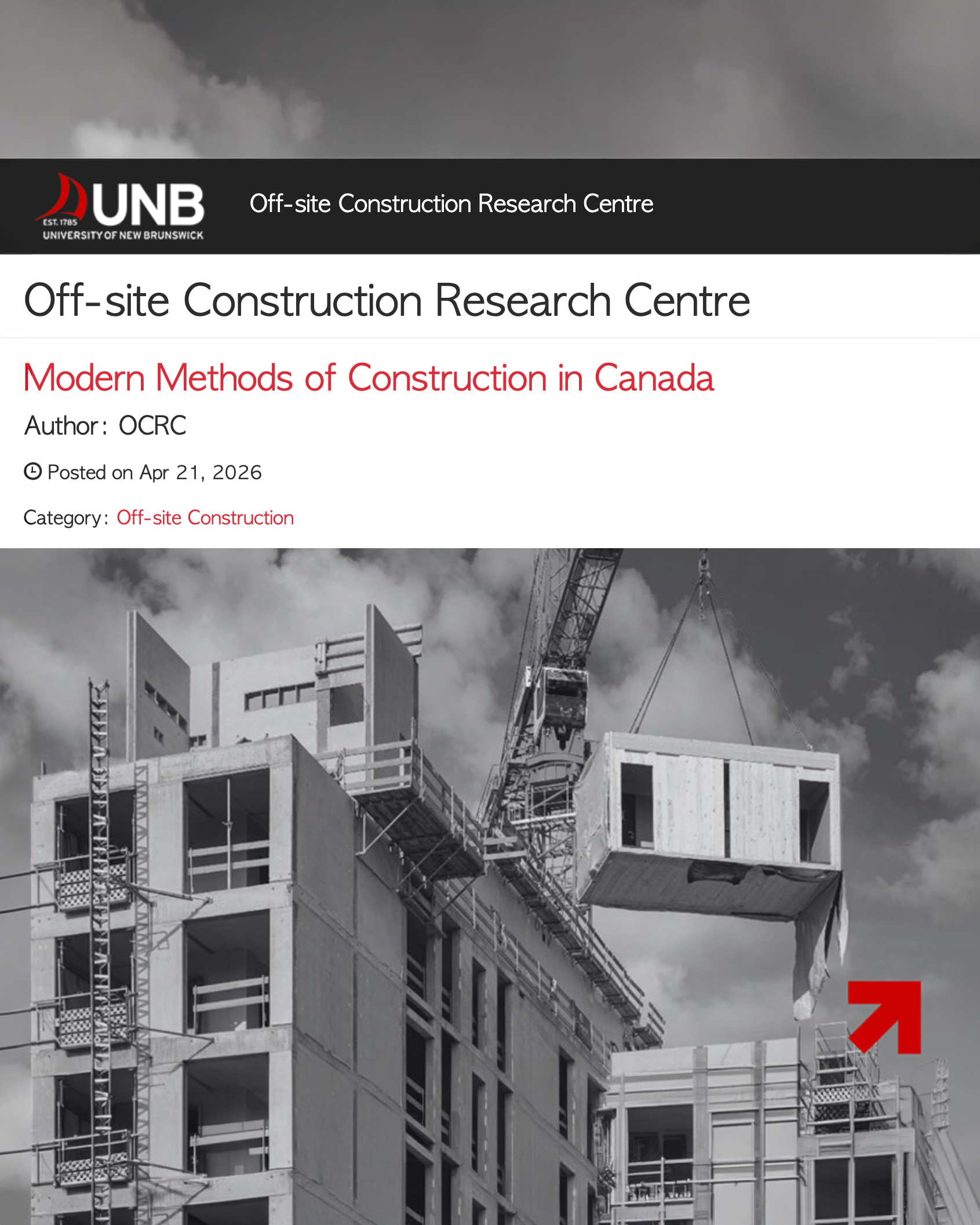
Off-site Construction Research Centre’sModern Methods of Construction in Canada
Author: OCRC
Why the conversation about “building better” in Canada needs more clarity and less confusion
Innovation in construction: what does that actually mean? If you’ve been anywhere near the construction conversation in Canada lately, you’ve probably heard terms like:
Modular
Prefabrication
Industrialized Construction
MMC

Building Smarter in Muskoka
By Peter Sale | October 11, 2025
‘Present methods of construction in Ontario produce substantial quantities of greenhouse gases and construction waste. We could use the same raw materials, manufactured into different products that would mean less waste, less energy use in construction (all the way from harvesting materials to final delivery of the building), and more carbon stored long-term in the building products used. Innovative timber products do an excellent job of sequestering carbon for the life of the building.’
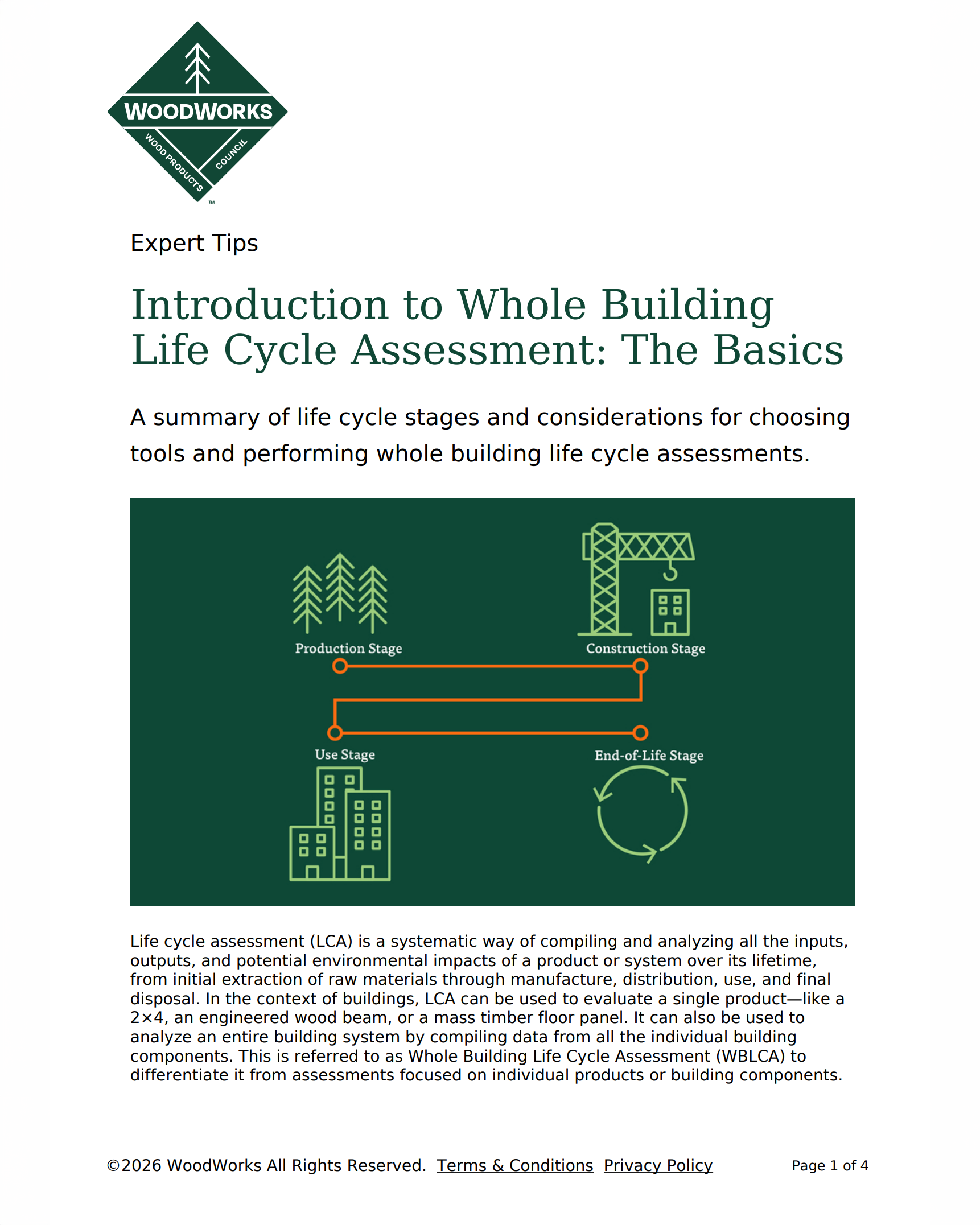
Wood Works - Introduction to Whole Building Life Cycle Assessment: The Basics
A summary of life cycle stages and considerations for choosing tools and performing whole building life cycle assessments.
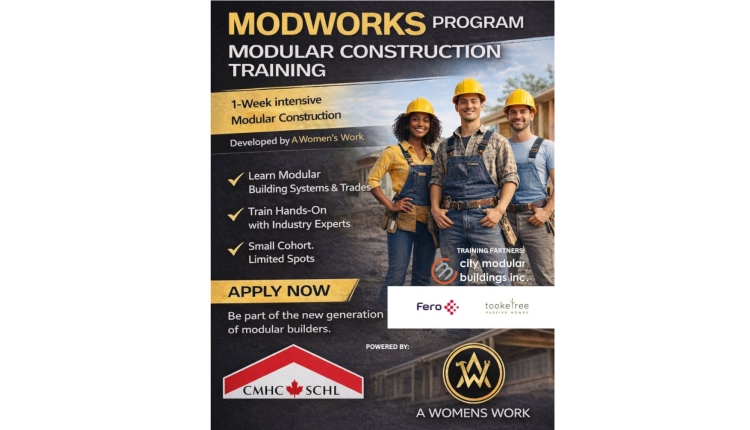
New MODWORKS Program Aims to Fast-Track Modular Construction Skills in Canada
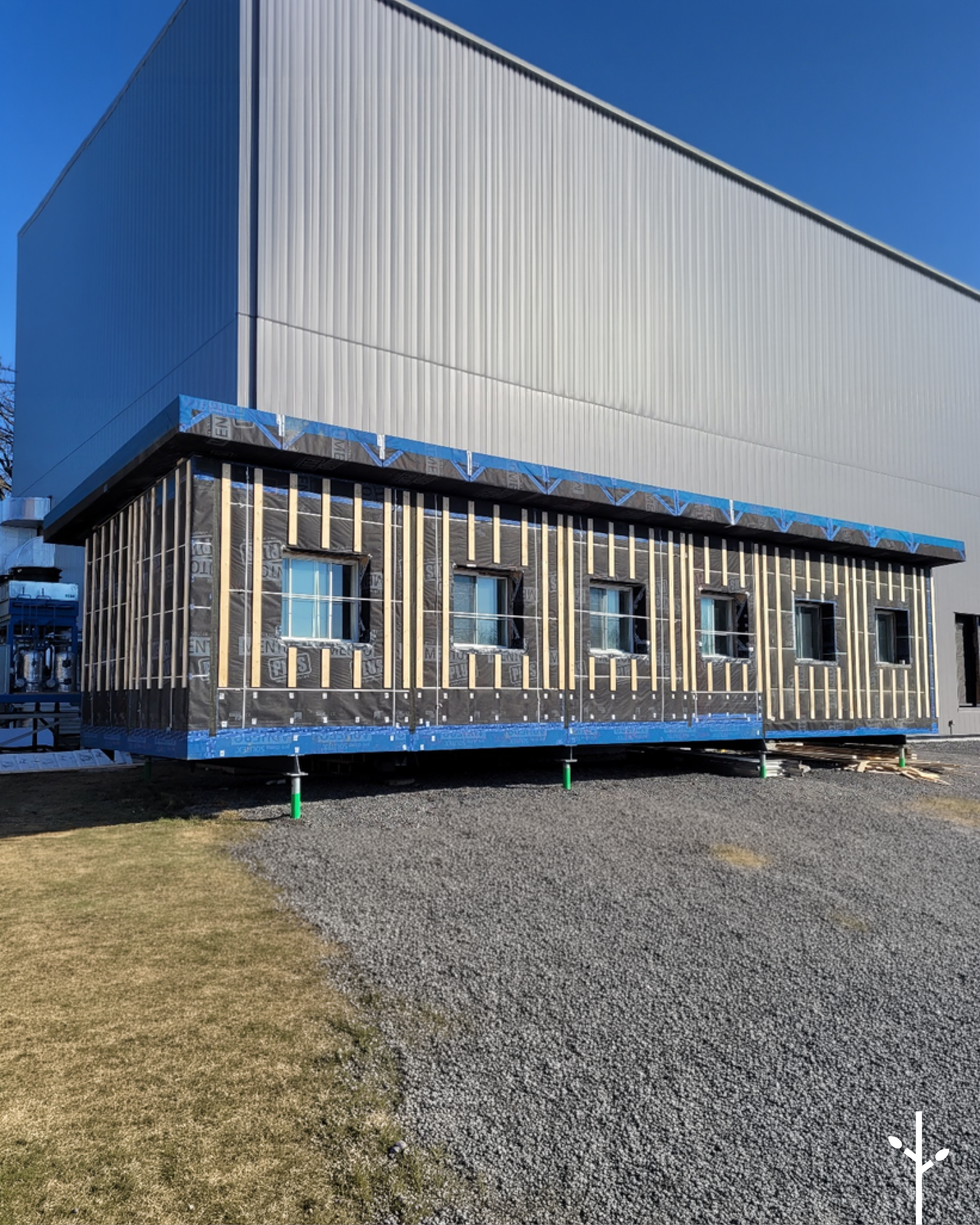
Low-Carbon Climate Resilient (LCCR) Living Lab
The Low Carbon Climate Resilient (LCCR) Living Lab consists of an office trailer that has undergone a Prefabricated Exterior Energy Retrofit (PEER) style retrofit using prototype, carbon-storing PEER panels.
The panel designs included low-carbon materials such as straw, cellulose, hemp, and wood fibre. Construction involved panelized retrofit of the walls and roof, new windows, and a new, low global warming potential (GWP) heat-pump system. Two different companies (Tooketree Passive Homes in Muskoka, ON and Savick in Edmonton, AB) fabricated the retrofit panels.
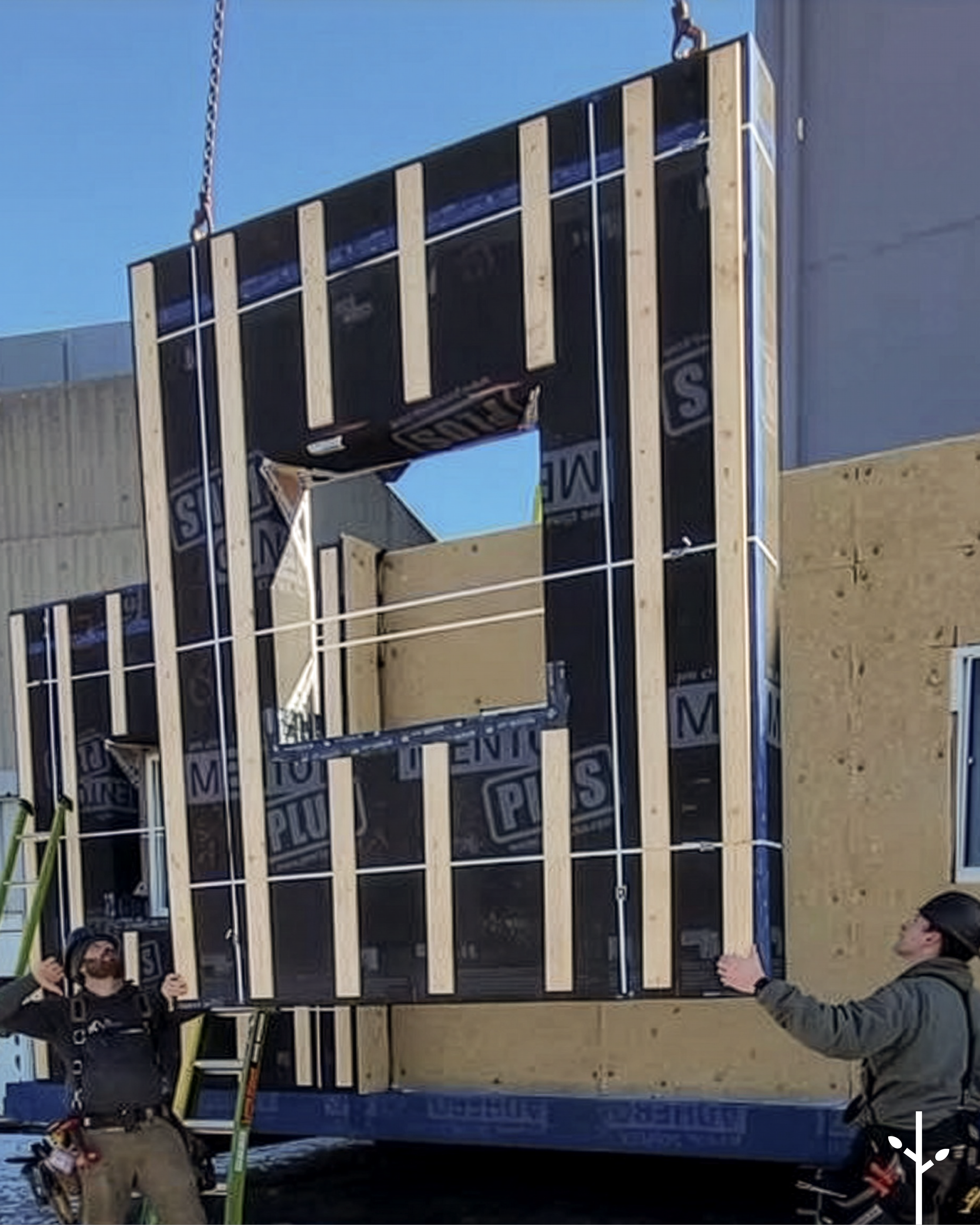
Low-Carbon Building Envelopes for Industrialized Construction and Retrofit
NRCan’s PEER Project (2016-2023) developed and demonstrated prefabricated retrofit solutions by adapting panel designs that already existed for new construction. That project provided industry with market-ready solutions. The Low-Carbon Building Envelopes for Industrialized Construction & Retrofit project considers how carbon-storing materials can be integrated into next-generation building enclosure assemblies for durable, resilient, scalable solutions for Canada’s future buildings and retrofits.
WEBSITES